Shipping items across international borders involves a maze of regulations and paperwork. While commercial invoices are standard for sales transactions, what happens when you’re sending something that isn’t for sale? This is where a no commercial value invoice template becomes an indispensable tool. Understanding its purpose and how to correctly use it can save you from customs delays, unexpected duties, and significant frustration. This article will demystify the “no commercial value” declaration, outlining its critical components and providing guidance to ensure your non-commercial shipments sail through customs smoothly.
Navigating international customs can often feel overwhelming, even for seasoned businesses and individuals. Whether you’re sending a personal gift, returning a product for repair, or dispatching product samples, the correct documentation is paramount. A properly completed declaration ensures that your package is correctly identified by customs officials, preventing it from being held up or incurring unnecessary taxes. Getting this right is not just about compliance; it’s about efficient and cost-effective shipping.
Understanding the Purpose of a No Commercial Value Invoice
When goods cross borders, customs authorities need to assess their nature and value for security, statistical, and tax purposes. A no commercial value invoice serves as a formal declaration for items that are not being sold or purchased. It clearly communicates to customs officials that no financial transaction is taking place, thereby influencing how the shipment is processed regarding duties and taxes.
Why Declare “No Commercial Value”?
Declaring “no commercial value” is crucial for several specific scenarios where items are not part of a sale. For instance, if you’re sending a personal gift to a friend or family member abroad, a commercial invoice would be inappropriate and could lead to the recipient being charged import duties. Similarly, sending prototypes, promotional samples, items for repair, or goods for temporary exhibition all fall under the “no commercial value” umbrella.
The primary benefit is to avoid unnecessary import duties and taxes that would typically apply to commercial goods. Customs officials rely on this declaration to distinguish between genuine sales and other forms of international transfer. Providing a clear and accurate declaration helps ensure that your recipient isn’t burdened with unexpected costs, fostering trust and smoother transactions. According to various customs agencies, misdeclaration can lead to fines or even confiscation, underscoring the importance of accuracy.
Distinguishing from a Commercial Invoice
The fundamental difference between a no commercial value invoice and a standard commercial invoice lies in the intent behind the shipment. A commercial invoice is issued when goods are sold by a seller to a buyer, clearly stating the sale price, payment terms, and other transaction-specific details. Its primary function is to facilitate payment and customs valuation for commercial sales.
Conversely, a no commercial value invoice explicitly states that no payment is being made for the goods themselves. While it still assigns a customs value (often a nominal amount or the cost of replacement for insurance purposes), this value is not a sale price. Instead, it informs customs about the item’s worth for statistical tracking or insurance coverage, without implying a sale. This distinction is vital for accurate customs clearance and preventing improper taxation.
Key Elements of an Effective No Commercial Value Invoice Template
Creating an effective no commercial value invoice requires attention to detail. Each piece of information serves a specific purpose, aiding customs officials in their assessment. Missing or inaccurate details can lead to delays, additional inspections, or even the return of your shipment. It’s about providing clarity and transparency.
Essential Information to Include
A well-structured no commercial value invoice template should include several key data points. These details help customs understand exactly what is being shipped and why it holds no commercial value for sale purposes. Accuracy across all fields is critical for smooth processing.
Here’s a breakdown of what you must include:
- Sender and Recipient Details: Full names, addresses, and contact information for both the party sending the goods and the party receiving them.
- Date of Issue: The date the invoice is created.
- Invoice Number: A unique reference number for tracking purposes.
- Description of Goods: A precise and detailed description of each item. Avoid vague terms; instead of “clothes,” specify “men’s cotton t-shirts (3 pcs).”
- Quantity: The exact number of each item.
- Unit Value and Total Value: Even with “no commercial value,” a customs value must be assigned for insurance, statistical purposes, and potential duty assessment if customs disagree with the “no commercial value” declaration. This is typically a nominal amount or the fair market value of the goods.
- Reason for Export: Clearly state why the goods are being shipped without commercial intent. Common reasons include “Gift,” “Sample,” “Return for Repair,” “Temporary Export,” or “Personal Effects.”
- Currency: Specify the currency used for the declared value.
- Country of Origin: The country where the goods were manufactured or produced.
- Harmonized System (HS) Codes: While not always mandatory for non-commercial shipments, including HS codes for each item can significantly expedite customs clearance. These international codes classify products for customs purposes.
- Declaration Statement: A formal statement affirming that the goods have no commercial value and are not for resale, along with a signature and printed name of the sender.
Tips for Completing Your Template Accurately
Filling out your no commercial value invoice template correctly is paramount to avoiding issues. Even minor errors or omissions can cause significant headaches during customs clearance. Adopting best practices ensures a hassle-free shipping experience for everyone involved.
Always be as specific as possible when describing items. For instance, instead of writing “electronics,” specify “used smartphone (Model X, IMEI Y).” Declare a realistic, even if nominal, value for your items. Customs officials will often verify the declared value against market prices, and an unreasonably low figure can raise suspicion. Ensure all necessary supporting documents, such as return authorizations or gift declarations, are attached to the shipment. Remember, clear communication with customs through accurate documentation is key to successful international shipping.
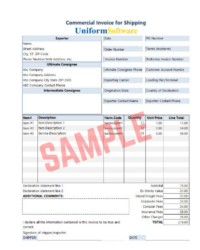
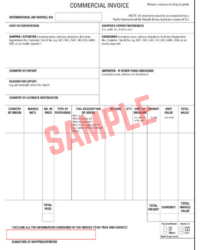
Sample No Commercial Value Invoice Template
Understanding the theoretical elements is one thing; seeing how they come together in a practical example is another. This sample illustrates what a well-formatted no commercial value invoice template should look like, providing a clear guide for your own shipments. It details each section, explaining the kind of information expected.
[Your Company Letterhead or Personal Details]
NO COMMERCIAL VALUE INVOICE
Invoice Number: NCVI-2023-001
Date: October 26, 2023
SENDER DETAILS:
Name: John Doe
Address: 123 Main Street, Anytown, Country, 12345
Phone: +1 (555) 123-4567
Email: [email protected]
RECIPIENT DETAILS:
Name: Jane Smith
Address: 456 Oak Avenue, Othercity, Another Country, 67890
Phone: +44 (20) 1234-5678
Email: [email protected]
REASON FOR EXPORT: Personal Gift
SHIPPING CARRIER: [e.g., FedEx, UPS, DHL]
TRACKING NUMBER: [e.g., 1234567890]
DESCRIPTION OF GOODS:
- Item 1: Used Women’s Leather Handbag (Brown)
- Quantity: 1
- Unit Value (USD): $50.00
- Country of Origin: Italy
- HS Code: 4202210000
- Item 2: New Men’s Wool Scarf (Blue)
- Quantity: 1
- Unit Value (USD): $30.00
- Country of Origin: United Kingdom
- HS Code: 6117100000
- Item 3: Assorted Chocolate Candies
- Quantity: 1 Box
- Unit Value (USD): $15.00
- Country of Origin: Switzerland
- HS Code: 1806320000
TOTAL DECLARED VALUE (for Customs Purposes Only): USD $95.00
CURRENCY: USD
DECLARATION:
I hereby declare that the information provided in this invoice is true and correct to the best of my knowledge and belief. I certify that these goods have no commercial value, are not for resale, and are being shipped for [Personal Gift] purposes only. No funds have been exchanged for these items.
Signature: ____________________________
Printed Name: John Doe
Title: Sender
Date: October 26, 2023
This example illustrates the necessary detail. Note how specific descriptions are used for each item, including a reasonable, albeit non-commercial, valuation. The clear “Reason for Export” and formal declaration statement are vital components. This comprehensive format significantly reduces the likelihood of customs inquiries or delays, ensuring a smoother journey for your package.
Utilizing a reliable no commercial value invoice template is a cornerstone of hassle-free international shipping for non-commercial goods. By meticulously completing each section and understanding its significance, you empower yourself to navigate the complexities of global customs regulations with confidence. This proactive approach minimizes the risk of unexpected fees or shipping delays, ensuring your items reach their destination as intended.
Whether you’re sending a heartfelt gift or essential repair parts, an accurate declaration is your best ally. Always double-check your entries, attach any required supporting documents, and select a template that covers all the necessary fields. This diligence ensures compliance and provides peace of mind for both the sender and the recipient, making international transfers straightforward and efficient.