Embarking on the journey of effective teaching often means finding structure that empowers both educators and students. For many years, one pedagogical framework has stood out for its clear, step-by-step approach to lesson design, providing a roadmap for successful instruction. This framework, developed by the esteemed educational psychologist Madeline Hunter, revolutionized how teachers approached daily lessons by breaking down the learning process into manageable, logical components. It is a system built on observable behaviors and measurable outcomes, aiming to ensure every minute in the classroom is purposeful and productive.
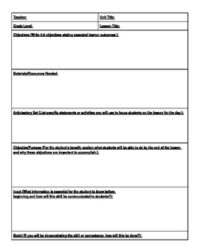
The beauty of the Madeline Hunter method lies in its universality and adaptability. Whether you are teaching mathematics, literature, science, or art, the core principles can be applied to create a robust and engaging learning experience. Teachers often seek a clear guide to implement this model, and that is where a Madeline Hunter lesson plan template becomes an invaluable tool. It simplifies the planning process, ensuring all critical elements are addressed and providing a consistent structure for lesson delivery. Think of it as your blueprint for building a strong foundation in any subject area.
Understanding the Core Elements of the Madeline Hunter Model
The Madeline Hunter teaching model is not just a sequence of steps; it is a thoughtful progression designed to maximize student learning. Each element plays a crucial role in preparing students for new information, delivering that information effectively, allowing for practice, and solidifying understanding. Educators who embrace this model often find their lessons become more focused, their students more engaged, and their teaching more impactful. It provides a common language for discussing effective instruction, making it a favorite among professional development programs.
Breaking down a lesson into these distinct phases allows teachers to concentrate on one aspect of instruction at a time, ensuring that each part is executed with precision. This systematic approach reduces guesswork and helps teachers to proactively anticipate student needs and potential challenges. For new teachers, it offers a sturdy scaffold upon which to build confidence and competence. For experienced educators, it provides a valuable checklist to refine and enhance existing practices, ensuring no critical step is overlooked.
Anticipatory Set
This is your hook. It is a brief activity or statement at the beginning of the lesson designed to capture students’ attention, connect to prior knowledge, and establish relevance for the day’s learning. A good anticipatory set creates curiosity and prepares students mentally for the upcoming content.
Objective
Clearly stated learning objectives are the heart of any Madeline Hunter lesson. They tell students exactly what they will be able to do by the end of the lesson. Objectives should be specific, measurable, achievable, relevant, and time-bound. This clarity guides both teaching and assessment.
Direct Instruction
This is where you present the new information or skill to students. It involves clear explanations, modeling, and demonstrating what students are expected to learn. The focus here is on conveying content in an understandable and accessible manner.
Guided Practice
After direct instruction, students need a chance to practice the new skill or concept with the teacher’s support. This allows for immediate feedback and correction, helping to solidify understanding before independent work begins.
Checking for Understanding
Throughout the lesson, and especially after guided practice, it is crucial to assess whether students have grasped the material. This can be done through various informal methods like questioning, observing student work, or quick checks.
Independent Practice
Once students demonstrate understanding, they move to independent practice. This is their opportunity to apply the new skill or knowledge on their own, reinforcing what they have learned without direct teacher intervention.
Closure
The closure brings the lesson to a satisfying end. It is a brief summary or review of the main points, allowing students to synthesize their learning and connect it back to the objectives. It provides a sense of completeness and helps students remember what they have learned.
Benefits of Using a Madeline Hunter Lesson Plan Template
Adopting a madeline hunter lesson plan template is more than just following a format; it is about embracing a philosophy of teaching that prioritizes clarity, engagement, and measurable learning outcomes. It simplifies the complex task of lesson design into a series of actionable steps, making it easier for teachers to create well-rounded and effective instructional plans. This structured approach ensures that every aspect of the learning process is considered, from grabbing attention at the start to solidifying knowledge at the end.
For many educators, the initial hurdle in lesson planning is knowing where to begin and how to ensure all necessary components are included. A pre-designed template removes this guesswork, offering a ready-made framework that guides them through each stage. It promotes consistency across lessons and even across different teachers, fostering a shared understanding of what constitutes a high-quality instructional period. This can be particularly beneficial for new teachers who are still developing their planning skills, providing them with a reliable foundation.
The practical advantages of using such a template extend far beyond mere organization. They contribute directly to better teaching and improved student learning.
- Enhances clarity and focus for both teacher and student.
- Ensures all essential instructional elements are addressed.
- Promotes consistent and effective lesson delivery.
- Supports differentiation by encouraging teachers to think about student needs at each stage.
- Simplifies lesson preparation, saving valuable time.
- Facilitates peer observation and feedback with a common structure.
- Improves student engagement through purposeful activities at every step.
Ultimately, the power of the Madeline Hunter model, when channeled through a practical lesson plan template, lies in its ability to transform abstract educational theory into concrete classroom practice. It is a system that stands the test of time, proving its value in diverse educational settings. By meticulously following its principles, educators can construct lessons that are not only well-organized but deeply impactful, fostering genuine understanding and skill development in their students. This thoughtful approach to planning ensures that the precious time spent in the classroom is utilized to its fullest potential, building a foundation for lifelong learning.