Embarking on the journey of lesson planning can sometimes feel like navigating a complex maze. We often find ourselves focusing on activities and content first, only to realize later whether those truly led to deep student understanding. What if there was a way to flip that script, to design learning experiences with the end in mind? That’s precisely where Understanding by Design (UbD) comes in, offering a powerful framework for purposeful curriculum development.
UbD encourages educators to think like assessors and designers, rather than just instructors. It’s about building lessons backward from desired results, ensuring every activity, assessment, and piece of content serves a clear purpose in helping students achieve genuine understanding. This approach doesn’t just improve student learning; it also brings clarity and intentionality to the entire teaching process.
Unpacking the Philosophy Behind Understanding By Design
Understanding by Design, often simply called UbD, is a curriculum development framework that champions “backward design.” Instead of starting with textbooks or activities, UbD prompts educators to first identify the desired results of learning. What do we want students to truly understand, know, and be able to do by the end of a unit or course? This initial clarity serves as the compass for all subsequent planning, ensuring that instruction is focused and effective. It moves us beyond mere content coverage to fostering deeper comprehension and transfer of knowledge.
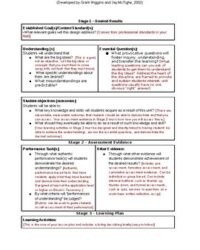
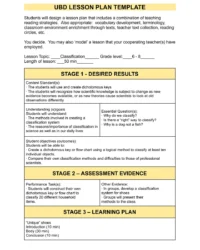
The UbD framework unfolds in three distinct stages. The first stage, “Identify Desired Results,” involves pinpointing big ideas, enduring understandings, essential questions, and specific knowledge and skills. Following this, Stage 2, “Determine Acceptable Evidence,” requires educators to think about how they will know students have achieved those desired results. This means designing authentic assessments and rubrics that truly reveal understanding. Finally, Stage 3, “Plan Learning Experiences and Instruction,” involves crafting the learning activities, teaching strategies, and resources that will equip students to succeed on those assessments and ultimately grasp the enduring understandings.
This systematic approach ensures that every part of the lesson contributes meaningfully to the learning objectives. It helps teachers create cohesive, rigorous, and engaging learning experiences that go beyond memorization, promoting critical thinking and the application of knowledge. When teachers thoughtfully apply the UbD principles, they empower students to not only learn content but to understand its significance and relevance, making connections that last long after the unit concludes.
Implementing this robust framework is significantly streamlined with a well-designed understanding by design lesson plan template. Such a template acts as a structured guide, ensuring all critical elements of the UbD process are considered and articulated. It transforms an abstract concept into a practical tool, making the powerful ideas of backward design accessible and actionable for everyday teaching.
Stage 1: Identifying Desired Results
This initial stage is foundational. It’s where you define the ultimate goals. What are the big ideas you want students to grasp and remember long-term? These are your “enduring understandings.” What complex questions will drive inquiry and promote deeper thought? These are your “essential questions.” And what specific knowledge and skills will students acquire? Being explicit about these elements from the outset provides a clear target for both teaching and learning.
Stage 2: Determining Acceptable Evidence
Once you know what you want students to understand, the next step is to figure out how you’ll know if they’ve understood it. This stage focuses on assessment. It involves designing performance tasks – authentic scenarios where students demonstrate their learning by applying knowledge and skills – and considering various forms of “other evidence” like quizzes, observations, or dialogues. The key here is that assessments are designed to reveal understanding, not just recall.
Crafting Your Effective Understanding By Design Lesson Plan Template
While the philosophy of UbD is profound, its practical application really shines when you use a structured understanding by design lesson plan template. This isn’t just about filling in blanks; it’s about having a guided conversation with yourself, as the designer, ensuring every facet of your lesson contributes to genuine understanding. A good template acts as a constant reminder of the backward design process, keeping your focus on desired results and evidence before jumping into activities.
A well-crafted template streamlines the planning process significantly, saving valuable time while enhancing the quality of your lessons. It ensures consistency across units and subjects, making it easier for colleagues to collaborate and for students to see the clear purpose behind their learning. By breaking down the UbD stages into actionable sections, a template transforms what might seem like a complex framework into a manageable, step-by-step process that you can use every time you design a new learning experience.
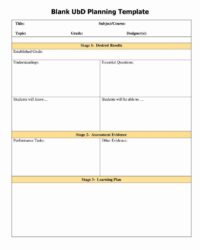
Typically, an effective understanding by design lesson plan template will guide you through each stage with specific prompts. This helps you capture all the necessary information, from the broad goals to the precise learning activities. Thinking through these sections methodically helps prevent gaps in planning and ensures alignment between what you teach, how you assess it, and what students are expected to learn.
- Desired Results: This section will prompt you to define your unit goals, articulate enduring understandings – the big ideas you want students to grasp – and formulate essential questions that will drive inquiry and discussion throughout the unit.
- Assessment Evidence: Here, you’ll outline the performance tasks students will undertake to demonstrate their understanding, along with the rubrics for evaluation. You’ll also plan for other evidence like quizzes, observations, or student self-assessments that will provide a comprehensive picture of learning.
- Learning Plan: This is where you design the specific learning activities, instructional strategies, and resources that will help students achieve the desired results and successfully complete the assessments. It includes considering differentiation for diverse learners and sequencing activities logically.
Embracing the UbD framework, supported by a clear lesson plan template, truly transforms the act of teaching from simply delivering content to orchestrating meaningful learning experiences. It empowers educators to design lessons that are not just engaging, but deeply impactful, fostering an environment where students don’t just learn facts, but truly understand concepts and apply them meaningfully.
By consistently applying this powerful approach, educators can cultivate classrooms where students are not just recipients of information, but active participants in their own learning journey, equipped with the critical thinking skills and deep insights needed to navigate an ever-changing world. This intentional design ensures that every moment in the classroom is purposeful, leading to measurable growth and genuine comprehension.