Embarking on the journey of literacy instruction can feel like navigating a vast ocean, but the Science of Reading provides a powerful compass. This evidence-based approach has transformed how we understand and teach reading, moving away from less effective methods to embrace practices proven to cultivate strong readers. It emphasizes explicit, systematic instruction in foundational skills, ensuring every child has the building blocks necessary for reading success.
For educators, translating the robust principles of the Science of Reading into daily classroom practice can be a significant undertaking. That is where a well-designed science of reading lesson plan template becomes an invaluable tool. It acts as a roadmap, guiding teachers through the essential components of effective literacy lessons and ensuring consistency in their instructional delivery.
Understanding the Core Components of a SoR Lesson Plan
When we talk about a Science of Reading lesson plan, we are really focusing on how to structure instruction that is explicit, systematic, and cumulative. This means clearly stating what students will learn, teaching skills in a logical order, and consistently building upon previously taught concepts. It moves away from “whole language” or “balanced literacy” approaches that often leave gaps in foundational knowledge, ensuring every child receives direct instruction in the mechanics of reading.
A truly effective Science of Reading lesson focuses on the five pillars of literacy: phonological awareness, phonics, fluency, vocabulary, and comprehension. Phonological awareness and phonics are the critical foundational pieces, teaching students to hear and manipulate sounds, and then connect those sounds to letters. Without this strong base, advanced reading skills become incredibly challenging for many learners.
Once foundational skills are in place, the focus shifts to fluency, which involves reading accurately, quickly, and with expression. Vocabulary development is continuous, expanding students’ word knowledge to better understand texts. Comprehension, the ultimate goal, integrates all these skills, allowing students to construct meaning from what they read. A robust lesson plan ensures these interconnected components are addressed comprehensively.
Furthermore, a strong SoR lesson plan incorporates ongoing assessment and opportunities for differentiation. Teachers need to consistently monitor student progress to identify areas where additional support or challenge is needed. This responsiveness ensures that instruction is tailored to meet the diverse needs of learners in the classroom, truly embodying the student-centered nature of effective teaching.
Key Elements to Include
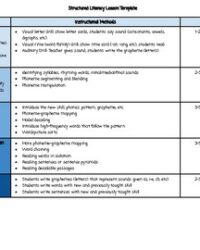
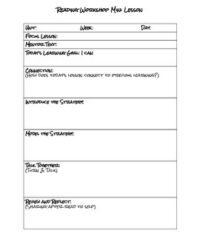
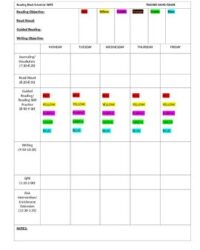
To create a powerful Science of Reading lesson, your template should prompt you to consider several crucial elements:
* Learning Objectives: Clearly state what students will be able to do by the end of the lesson. These should be specific, measurable, achievable, relevant, and time-bound.
* Materials: List all necessary resources, from decodable texts and phonics cards to whiteboards and markers.
* Warm-up/Review: Begin with a brief activity to activate prior knowledge or review previously taught concepts.
* Explicit Instruction: The teacher directly models the new skill or concept. This is where you explain the “what” and “how.”
* Guided Practice: Students practice the new skill with immediate feedback and support from the teacher.
* Independent Practice: Students apply the skill on their own, allowing the teacher to assess understanding.
* Assessment: How will you check for student understanding and mastery of the learning objective? This can be informal or formal.
* Differentiation: Plans for supporting struggling learners and extending learning for advanced students.
Why Structure Matters
The structured nature of a science of reading lesson plan template provides immense benefits. It ensures that no critical components are overlooked, that lessons build logically, and that teachers can maintain consistency across units and grade levels. This predictability is not only beneficial for teachers in streamlining their planning process but also for students, who thrive on routine and clear expectations, making the learning process more accessible and less intimidating.
How a Template Elevates Your Teaching Practice
Utilizing a dedicated science of reading lesson plan template isn’t just about ticking boxes; it’s about transforming your instructional efficacy. These templates offer a streamlined way to embed the complex principles of the Science of Reading into every lesson you teach. They act as a constant reminder of best practices, ensuring you systematically cover all necessary literacy components, from phonological awareness drills to comprehension strategies, without missing a beat. This consistency is vital for cumulative learning and ensuring all students receive comprehensive instruction.
Moreover, a well-designed template can be a significant time-saver. Instead of starting from scratch for each lesson, you have a pre-structured framework that prompts you for essential information. This frees up valuable planning time, allowing you to focus more on tailoring content to student needs, gathering appropriate materials, and reflecting on instructional delivery. It removes the guesswork and provides a clear pathway from theory to practical application in the classroom.
Ultimately, embracing a science of reading lesson plan template empowers educators to teach with confidence and precision. It simplifies the intricate world of literacy instruction into manageable, actionable steps, ensuring that every lesson is purposeful, research-aligned, and designed for maximum student benefit. It’s an indispensable tool for anyone committed to fostering strong, confident readers.
* Streamlined planning
* Guaranteed skill coverage
* Data-driven instruction support
* Improved student outcomes
* Reduced teacher burnout
Adopting a structured approach to lesson planning, especially one rooted in the Science of Reading, is a powerful step towards unlocking every student’s reading potential. It moves beyond anecdotal methods to embrace strategies proven by decades of research. By meticulously planning lessons that are explicit, systematic, and responsive to student needs, educators can create a robust foundation for literacy development.
The consistent application of these evidence-based practices, guided by a comprehensive lesson plan template, ensures that no child is left behind in their journey to becoming a proficient reader. This commitment to structured, intentional instruction not only elevates teaching practices but fundamentally transforms learning experiences, setting students on a lifelong path of reading success.