Ever found yourself staring at a blank page, wondering how to craft the perfect physical education class that keeps students engaged, active, and learning? It’s a common challenge for even the most seasoned educators. Between managing a diverse group of students, limited resources, and varied skill levels, designing an impactful phys ed session can feel like a daunting task. But what if there was a way to streamline your planning, ensuring every minute counts and every student benefits?
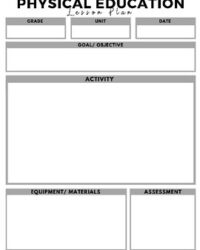
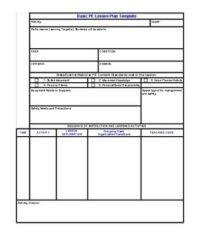
That’s where the magic of a well-structured phys ed lesson plan template comes in handy. Think of it as your secret weapon, a ready-made framework that guides you through all the essential elements of a successful lesson. It’s not about rigid adherence, but rather providing a foundational structure that frees you up to focus on the dynamic, interactive aspects of teaching. By utilizing a comprehensive template, you can ensure consistency, cover all necessary objectives, and ultimately enhance the learning experience for your students.
Building a Brilliant Phys Ed Lesson: What Goes Into It?
Creating an effective physical education lesson plan isn’t just about listing activities; it’s about thoughtfully designing a learning journey that supports student development, promotes physical literacy, and fosters a lifelong love for movement. A robust phys ed lesson plan template acts as your blueprint, ensuring you consider every crucial component before stepping onto the court or field. This meticulous preparation not only boosts your confidence as an instructor but also significantly enhances student engagement and learning outcomes. It helps you articulate clear goals, map out transitions, and even anticipate potential challenges, allowing for a smoother, more productive class.
The beauty of a template lies in its ability to prompt you to think holistically about the lesson. Are your objectives measurable? Is the warm-up effective and relevant to the main activity? Have you considered differentiation for various skill levels? These are the kinds of questions a good template encourages you to answer. It transforms what could be a scattered collection of ideas into a cohesive, goal-oriented educational experience. Moreover, having a standardized format makes it easier to review past lessons, share plans with colleagues, or even adapt them for different age groups or class sizes.
Key Elements of an Outstanding Phys Ed Lesson Plan
While specific needs may vary, most high-quality phys ed lesson plans share several fundamental components designed to ensure a well-rounded and effective session. Neglecting any of these can lead to disorganization or missed learning opportunities. By integrating these elements into your phys ed lesson plan template, you create a robust framework for success:
- Clear Learning Objectives: What will students be able to know or do by the end of the lesson? These should be specific, measurable, achievable, relevant, and time-bound (SMART).
- Warm-up and Dynamic Stretching: Prepares the body for activity, increases heart rate, and improves flexibility. It should ideally relate to the skills or movements of the main activity.
- Main Activity/Skill Development: The core of the lesson, focusing on teaching new skills, practicing existing ones, or engaging in a specific game or sport. This is where most of the active learning happens.
- Modifications and Differentiation: How will you cater to students with varying abilities, needs, or learning styles? Including options for simplification or greater challenge is vital.
- Cool-down and Static Stretching: Gradually brings the body back to a resting state, aids in muscle recovery, and improves long-term flexibility.
- Assessment and Reflection: How will you gauge student understanding or skill acquisition? This could be informal observation, a quick check-for-understanding, or a more formal assessment.
Beyond these core elements, consider including sections for equipment needed, safety considerations, and time management for each segment. A comprehensive template ensures that no critical aspect is overlooked, allowing you to walk into your class feeling completely prepared and ready to deliver a high-quality physical education experience.
Making Your Phys Ed Lesson Plan Template Work for You
While a pre-designed phys ed lesson plan template offers an incredible starting point, its true value comes from your ability to customize and adapt it to your unique teaching environment and student population. No two classes are exactly alike, and what works perfectly for one group might need a slight tweak for another. This flexibility is key to transforming a generic outline into a truly personalized and effective teaching tool. Think of the template as a living document, one that evolves with your experience and your students’ needs, allowing you to fine-tune lessons for optimal impact.
When you sit down to plan, consider the specific age group, their prior experience with the activities, and any particular challenges or opportunities your students present. Are there students with mobility issues? Is the class particularly energetic? Do you have limited space? These factors should influence your choice of activities, modifications, and even the pace of the lesson. Don’t be afraid to add extra notes, reminders, or even diagrams directly onto your template to make it even more functional for your personal use. The more tailored it is to your real-world scenarios, the more effective it will be in the heat of the moment.
Embracing a template doesn’t mean sacrificing creativity; quite the opposite. By handling the structural groundwork, a template frees up your mental energy to infuse your lessons with exciting new games, innovative teaching techniques, and personalized feedback for students. Here are some quick tips for making any template your own:
- Start Simple: Don’t try to perfect every detail on your first go. Get the basic structure down, then refine it over time.
- Review and Revise: After each lesson, take a few minutes to jot down what went well and what could be improved. Use these notes to modify your template for future use.
- Build a Library: Over time, you can create a collection of specialized templates for different units, age groups, or types of activities (e.g., a template for team sports vs. individual fitness).
- Share and Collaborate: Discussing templates with fellow teachers can provide new perspectives and ideas for improvement.
Ultimately, a well-utilized template empowers you to deliver engaging and effective physical education lessons with greater confidence and less stress. It transforms the often-overwhelming task of lesson planning into a structured, manageable process, ensuring that every session is purposeful and contributes to your students’ overall development.
So, take the leap and embrace the power of strategic planning in your physical education classroom. When you consistently deliver well-organized, objectives-driven lessons, you not only make your job easier but also cultivate an environment where students thrive physically, mentally, and socially. The foundation you lay through meticulous planning translates directly into more active, engaged, and healthier students, ready to embrace movement for a lifetime.