In today’s diverse classrooms, creating learning experiences that genuinely work for every student can feel like a complex puzzle. We often find ourselves trying to adapt lessons on the fly, making tweaks here and there to meet individual needs. But what if we could design lessons from the very beginning with everyone in mind, building flexibility and accessibility right into the core? This is exactly where the power of Universal Design for Learning comes into play, offering a framework to proactively address learner variability.
The concept of Universal Design for Learning, or UDL, isn’t just another educational trend; it’s a paradigm shift towards inclusive instruction. And at its heart lies a practical tool for educators: the universal design for learning lesson plan template. This isn’t about adding more work to your plate; it’s about making the work you already do more effective, more equitable, and ultimately, more rewarding for both you and your students. It helps you anticipate diverse needs and build multiple pathways to learning from the ground up.
Why Embrace a Universal Design for Learning Lesson Plan Template?
Adopting a universal design for learning lesson plan template transforms your lesson planning process from a reactive task into a proactive strategy. Instead of designing a lesson for the “average” student and then retrofitting it for those who deviate, you start by recognizing that there is no “average” learner. Every classroom is a vibrant mosaic of backgrounds, learning styles, strengths, and challenges. A UDL template encourages you to consider this rich diversity from the outset, leading to lessons that are inherently more accessible and engaging for everyone in your class.
Think about it this way: when architects design a building using universal design principles, they include ramps alongside stairs, wide doorways, and clear signage, benefiting not just individuals with disabilities but also parents with strollers, delivery personnel, and anyone carrying heavy items. Similarly, a UDL lesson plan template helps you build in multiple options for engagement, representation, and action and expression, which ultimately benefits all students, not just those with identified special needs. It moves away from “one size fits all” to “one size fits all by offering many options.”
This proactive approach significantly reduces the need for extensive differentiation or individual accommodations later on. By planning for variability upfront, you create a learning environment where barriers are minimized before they even arise. This saves valuable time and energy, allowing you to focus more on facilitating learning and less on constantly adapting your materials or methods. It empowers you to be an architect of learning, constructing robust and flexible educational experiences.
Moreover, using a consistent universal design for learning lesson plan template fosters a deeper understanding of the UDL principles themselves. As you repeatedly apply them in your planning, these principles become second nature, weaving their way into your daily instructional decisions. It helps cultivate a mindset of flexibility and inclusivity, which extends beyond the lesson plan and into every aspect of your teaching practice, enhancing student agency and ownership over their learning journey.
The Three Pillars of Universal Design for Learning
At the core of any effective universal design for learning lesson plan template are the three guiding principles, often referred to as the “What,” “How,” and “Why” of learning. Understanding these helps you build a truly flexible lesson.
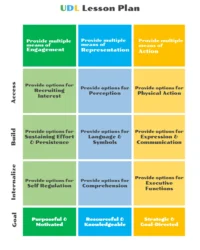
The first principle is providing multiple means of **Engagement**. This addresses the “why” of learning – motivating and sustaining interest. It means offering various ways to stimulate curiosity, foster persistence, and support self-regulation. Think about choice, relevance, and collaboration.
Secondly, providing multiple means of **Representation** focuses on the “what” of learning – how information is presented to learners. This involves offering diverse methods for perceiving information, comprehending content, and understanding language and symbols. Consider visual, auditory, and tactile options.
Finally, providing multiple means of **Action & Expression** deals with the “how” of learning – how learners can demonstrate what they know. This involves offering varied ways for students to navigate, respond, express ideas, and communicate their understanding. Think beyond traditional essays to presentations, projects, or digital creations.
Crafting Your Effective Universal Design for Learning Lesson Plan Template
When you sit down to create or adapt a universal design for learning lesson plan template, think about it as designing a framework that supports fluidity and options. It’s not about rigidly following a script, but about outlining the pathways and supports that will be available to all students. Your template should prompt you to consider not just the content you’re teaching, but also the diverse ways students will access that content, engage with it, and demonstrate their understanding.
A well-designed template encourages you to move beyond simply listing activities and instead encourages deeper reflection on learning goals, potential barriers, and the proactive solutions UDL offers. It helps you intentionally plan for variety in your instructional methods and assessment strategies. The process of filling out a UDL template becomes an exercise in anticipating the rich tapestry of your classroom and weaving in supports for every thread.
Remember, your template is a living document. It should evolve as you learn more about your students and refine your understanding of UDL principles in practice. Don’t be afraid to tweak and adjust it over time to better suit your teaching style and the specific needs of your learners. The goal is to create a planning tool that makes UDL principles second nature, transforming your lesson planning into a powerful engine for inclusive education.
Essential Components of Your UDL Template
- Clear Learning Goals: What do you want all students to learn and be able to do?
- Anticipated Learner Variability: What are the potential barriers or different ways students might approach this lesson?
- Multiple Means of Representation: How will you present information in diverse ways (e.g., text, audio, video, realia)?
- Multiple Means of Action & Expression: How will students demonstrate their learning in varied ways (e.g., writing, speaking, creating, performing)?
- Multiple Means of Engagement: How will you provide options for stimulating interest, sustaining effort, and self-regulation?
- Assessment Strategies: How will you check for understanding, offering flexible options for demonstrating mastery?
- Materials and Resources: What tools, technologies, and supports will be available to students?
Implementing a universal design for learning lesson plan template in your practice is a transformative step towards cultivating truly inclusive learning environments. It shifts the focus from fixing student deficits to designing flexible instruction that anticipates and celebrates the rich diversity of your classroom. By proactively building in choices and options, you empower every learner to access the curriculum, engage meaningfully with content, and express their knowledge in ways that suit their strengths.
Ultimately, embracing a UDL template isn’t just about crafting better lesson plans; it’s about fostering a culture of accessibility and equity in education. It encourages a continuous cycle of reflection and refinement, ensuring that learning experiences are not only effective but also deeply respectful of each student’s unique journey. This approach allows educators to build strong, flexible foundations for learning, preparing all students for success both inside and outside the classroom.