Have you ever wondered how to effectively support English language learners in your classroom while still delivering high-quality content instruction to all students? It’s a common challenge, but thankfully, there’s a widely recognized framework designed specifically for this purpose: the Sheltered Instruction Observation Protocol, or SIOP Model. This evidence-based approach helps educators integrate content and language instruction, making academic concepts more accessible for diverse learners without watering down the curriculum. It’s all about purposeful planning and effective delivery.
The SIOP Model focuses on eight key components of instruction, from lesson preparation to review and assessment, ensuring that teachers consider both content objectives and language objectives in every lesson. By systematically addressing these elements, teachers can create dynamic, engaging, and highly effective learning environments for all students, especially those acquiring a new language. This comprehensive framework not only benefits English language learners but also improves teaching practices for the entire student population, making lessons clearer and more structured.
Unpacking the Essential Elements of a SIOP Lesson Plan Template
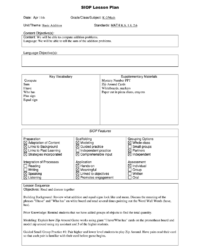
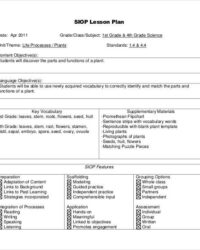
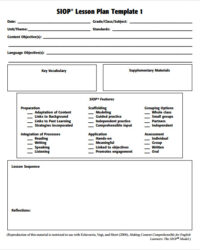
A robust siop model lesson plan template is much more than just an outline; it is a meticulously structured guide that ensures every aspect of a lesson contributes to both content and language acquisition. It provides a systematic way for teachers to think through their objectives, materials, and instructional strategies, making the learning process explicit and understandable for English language learners. This thoughtful planning helps bridge the gap between students’ current language proficiency and the academic language required to succeed in content areas.
The template typically organizes the lesson into the eight key components of the SIOP Model, which include lesson preparation, building background, comprehensible input, strategies, interaction, practice and application, lesson delivery, and review and assessment. Each component prompts teachers to consider specific actions and materials that will facilitate learning for students at various language proficiency levels. For instance, in lesson preparation, you’re encouraged to define clear content and language objectives, which are fundamental to the SIOP approach.
Key Components within the Template
-
Lesson Preparation: This section typically asks you to specify your content objectives (what students will learn about the subject matter) and language objectives (how students will use or develop their English language skills). It also covers selecting appropriate materials that support both objectives and adapting content to be accessible.
-
Building Background: Before diving into new material, a good template will guide you to think about how you’ll connect new concepts to students’ prior knowledge and experiences. This might involve pre-teaching vocabulary or using visuals to activate schema, making the content more relatable and less intimidating.
-
Comprehensible Input: Here, the focus is on making the language used in instruction understandable. The template will prompt you to consider techniques like using simpler language, enunciating clearly, repeating key terms, and providing non-verbal cues. Visuals, gestures, and demonstrations are incredibly powerful tools to ensure students grasp the meaning.
-
Strategies: This component encourages the use of various learning strategies to help students become more independent learners. The template prompts for metacognitive, cognitive, and social affective strategies. Teachers are encouraged to explicitly teach students how to think about and monitor their own learning, such as summarizing, predicting, or asking clarifying questions.
This detailed approach ensures that teachers are consistently thinking about language demands alongside content demands, leading to more inclusive and effective instruction. By structuring the planning process this way, a SIOP template helps avoid accidental omissions of crucial support for English language learners, ensuring they have every opportunity to succeed.
Maximizing Learning with a SIOP Model Lesson Plan Template
Utilizing a comprehensive siop model lesson plan template goes far beyond simply checking off boxes; it transforms the way teachers approach their lessons, leading to more engaging and effective learning experiences for all students, particularly English language learners. This systematic planning tool encourages teachers to be incredibly intentional about every aspect of their instruction, from the vocabulary they choose to the types of activities they design. The benefits extend to improved student engagement, higher academic achievement, and a more inclusive classroom environment where every learner feels supported and challenged appropriately.
One of the greatest advantages is the clarity it brings to both teaching and learning. When content and language objectives are clearly defined and consistently addressed throughout the lesson, students know exactly what they are expected to learn and how they are expected to use language. This transparency reduces anxiety for English language learners and helps them focus their efforts. Moreover, the template promotes the consistent use of scaffolding techniques, such as graphic organizers, sentence starters, and peer collaboration, which are essential for making complex content accessible.
Here are some ways a SIOP template enhances your teaching:
-
Structured Planning: It provides a clear, organized framework that guides you through all essential instructional components, ensuring no critical elements for language learners are overlooked.
-
Improved Instruction: By focusing on comprehensible input and interaction, it encourages dynamic teaching methods that cater to diverse learning styles and language proficiencies.
-
Enhanced Student Outcomes: When lessons are meticulously planned with language support in mind, English language learners are better equipped to grasp new concepts and participate actively, leading to stronger academic performance.
-
Professional Growth: Consistently using the template helps teachers internalize SIOP principles, fostering a deeper understanding of effective strategies for supporting language acquisition.
By integrating this thoughtful planning tool into daily practice, educators can create a truly equitable and effective learning environment. It empowers teachers to confidently address the diverse needs of their classrooms, fostering academic success and language proficiency simultaneously.
Embracing the SIOP Model through its lesson plan template can truly revolutionize your teaching approach. It’s not just about meeting the needs of English language learners; it’s about refining your instructional craft to be more precise, more engaging, and ultimately, more effective for every single student who walks through your classroom door. The framework provides a solid foundation, guiding you to design lessons that are rich in content, sensitive to language development, and full of opportunities for genuine student interaction and mastery.
Ultimately, by consistently applying the principles embedded within the SIOP template, you build a classroom where every student feels seen, heard, and capable of achieving academic success. This thoughtful and systematic approach to lesson design leads to deeper learning experiences, greater student confidence, and a more dynamic educational journey for everyone involved. It’s a powerful tool for fostering both language proficiency and academic excellence, creating a brighter future for all learners.