Have you ever finished teaching a lesson and thought, “Did my students really grasp what I wanted them to?” Or perhaps you’ve felt a bit adrift during lesson planning, wondering where to even begin? For many educators, the traditional approach of starting with activities and then trying to fit learning objectives around them can feel a bit like building a house without first drawing up the blueprints. It’s a common challenge, but there’s a powerful framework that turns this process on its head, quite literally, to ensure clarity and purpose from the outset.
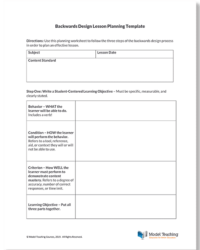
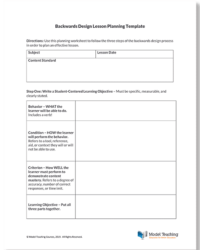
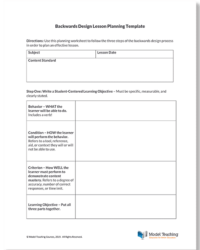
This framework is known as Backwards Design, and it’s a revolutionary way to approach teaching and learning. Instead of asking “What activities will I do today?”, it prompts educators to ask “What do I want my students to know and be able to do by the end of this lesson or unit?” This simple shift in perspective can transform your planning, making every moment in the classroom more intentional and effective. Using a well-structured backwards by design lesson plan template can be your secret weapon for achieving truly meaningful learning outcomes.
Deconstructing the Backwards Design Framework
The beauty of Backwards Design lies in its logical, three-stage approach, which guides you from desired outcomes to actual classroom experiences. It’s about designing with the end in mind, ensuring that every activity, assessment, and piece of content directly contributes to the learning goals. This method, popularized by Wiggins and McTighe in “Understanding by Design,” pushes us to think critically about what truly matters for student understanding and skill development. It’s a process that cultivates deep learning rather than superficial coverage.
The first stage compels us to identify the specific knowledge and skills students should acquire. This isn’t just about listing topics; it’s about articulating enduring understandings and essential questions that students will grapple with. Think about the big ideas that will stick with them long after the lesson is over. This initial step requires clarity and a deep understanding of the curriculum and student needs, moving beyond vague objectives to concrete, measurable goals.
Identifying Desired Results
At this foundational stage, you define what students will understand, know, and be able to do. This involves unpacking content standards, identifying core concepts, and pinpointing transferable skills. What are the “big ideas” you want students to grasp? What essential questions will drive their inquiry? This is where you establish the learning targets that will guide all subsequent decisions. It’s about vision casting for student learning.
Determining Acceptable Evidence
Once you know where you want students to go, the next logical step is to figure out how you’ll know they’ve arrived. This stage focuses on assessment. What evidence will demonstrate that students have achieved the desired results? This includes not only traditional tests but also performance tasks, projects, observations, and discussions. The key is to design assessments that genuinely measure understanding and proficiency, aligning directly with the established learning goals. This stage ensures that assessments are not just tacked on at the end, but are integral to the learning journey.
Planning Learning Experiences and Instruction
Only after clearly defining outcomes and how to assess them do you plan the actual teaching and learning activities. This stage involves designing lessons, selecting resources, and crafting instructional strategies that will enable students to achieve the desired results and successfully demonstrate their learning. This might include direct instruction, collaborative projects, inquiry-based learning, or hands-on experiments. The activities are purposefully chosen to build the necessary knowledge and skills, leading students toward the intended understanding.
Unlocking the Advantages of a Backwards By Design Lesson Plan Template
Embracing the backwards design approach, especially with the aid of a structured backwards by design lesson plan template, offers a multitude of benefits for both educators and students. It streamlines the planning process by providing a clear roadmap, ensuring that every minute of instruction is purposeful and productive. For teachers, it reduces that nagging uncertainty about lesson effectiveness, because the entire design is geared towards observable outcomes. It really helps you stay focused on what truly matters.
This clarity extends directly to students. When lessons are designed with the end in mind, students understand the purpose behind their learning. They can see how each activity contributes to their overall understanding, fostering greater engagement and motivation. It moves learning from being a series of isolated tasks to a coherent, meaningful journey towards specific achievements. It cultivates a sense of ownership over their learning progress, as the expectations are clear from the beginning.
Here are some key advantages:
- Enhanced Clarity and Focus: Both teachers and students gain a clear understanding of the learning objectives and what successful performance looks like from the outset.
- Improved Assessment Design: Assessments are intentionally created to measure essential understandings and skills, making them more authentic and effective.
- Greater Cohesion in Lessons: All learning activities are purposefully aligned with the desired results, eliminating “fluff” and ensuring every moment counts.
- Increased Student Engagement: Students are more motivated when they understand the purpose of their learning and how activities contribute to their overall success.
- More Effective Use of Time: Planning becomes more efficient, and instructional time in the classroom is maximized for relevant learning experiences.
- Better Data for Differentiation: Clear outcomes and assessments provide better data for teachers to identify student needs and differentiate instruction effectively.
Adopting this methodology profoundly impacts classroom effectiveness, moving beyond mere content coverage to deep understanding and skill mastery. By prioritizing outcomes, designing appropriate assessments, and then crafting engaging learning experiences, you’re not just teaching lessons; you’re building pathways to lasting comprehension and achievement. It’s a strategic shift that benefits everyone involved in the educational journey, leading to more impactful and rewarding teaching experiences.