Ever feel like your lesson plans could use a little more spark? Do you aim to create lessons that genuinely engage students, encourage deep exploration, and solidify understanding? The 5 E instructional model offers a powerful framework to do just that, guiding learners through a systematic journey of discovery and knowledge construction.
Moving beyond traditional lesson structures, the 5 E model prioritizes active learning and inquiry-based approaches, making complex topics more accessible and memorable for students. Whether you are a seasoned educator looking to refine your pedagogical tools or a new teacher seeking a robust planning system, understanding and utilizing a well-designed 5 e lesson plan template can revolutionize your classroom experience and boost student outcomes.
Understanding the 5 E Model: A Deeper Dive
The 5 E instructional model is a constructivist approach to learning, meaning it believes learners build knowledge and meaning from their experiences. It breaks down the learning process into five distinct yet interconnected phases: Engage, Explore, Explain, Elaborate, and Evaluate. Each phase serves a specific purpose in fostering a comprehensive understanding of a topic, moving students from initial curiosity to mastery and application.
The journey begins with “Engage,” where the goal is to capture students’ attention and tap into their prior knowledge, setting the stage for what’s to come. This isn’t just about fun; it’s about creating a relevant context for learning. Following this, “Explore” encourages students to actively investigate the concepts, often through hands-on activities or experiments, allowing them to gather data and observe phenomena independently. This phase is crucial for developing critical thinking and problem-solving skills.
Once students have had a chance to explore, the “Explain” phase provides an opportunity for them to articulate their observations and for the teacher to introduce formal concepts, definitions, and explanations that clarify and extend student understanding. This is where the teacher acts as a facilitator, helping students connect their findings to scientific or mathematical principles. “Elaborate” then challenges students to apply their newly acquired knowledge to new situations or more complex problems, deepening their understanding and demonstrating its transferability.
Finally, “Evaluate” allows both students and teachers to assess understanding and progress throughout the learning cycle. This can involve formal assessments, but also includes ongoing informal observations and student self-reflection. By moving through these phases systematically, the 5 E model ensures a holistic learning experience that is both engaging and effective.
Engage: Sparking Curiosity
- Purpose: To pique students’ interest, connect to prior knowledge, and establish a context for learning.
- Activities: Provocative questions, captivating demonstrations, real-world problems, short videos, or intriguing images.
Explore: Hands-On Discovery
- Purpose: To provide opportunities for students to investigate, experiment, and interact with the subject matter.
- Activities: Lab experiments, group investigations, data collection, simulations, or field observations.
Explain: Making Sense of Concepts
- Purpose: To allow students to articulate their understanding and for the teacher to introduce formal concepts and definitions.
- Activities: Class discussions, presentations, direct instruction, note-taking, concept mapping, or video analysis.
Elaborate: Applying New Knowledge
- Purpose: To extend understanding, apply concepts to new situations, and demonstrate deeper comprehension.
- Activities: Problem-solving tasks, project-based learning, debates, creating models, or designing experiments.
Evaluate: Assessing Understanding
- Purpose: To assess student learning and mastery of objectives, and for students to reflect on their own understanding.
- Activities: Quizzes, performance tasks, lab reports, presentations, journal entries, or self-assessment rubrics.
Crafting Your Perfect 5 E Lesson Plan Template
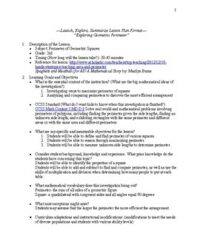
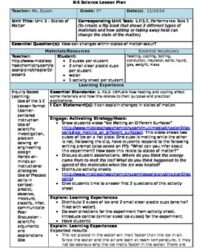
While the 5 E model provides the pedagogical framework, a robust 5 e lesson plan template provides the practical structure to implement it seamlessly. A good template doesn’t just list the five Es; it anticipates your planning needs, ensuring you consider all critical aspects of a successful lesson before you even step into the classroom. Using a consistent template saves valuable planning time, helps maintain a high standard of instruction, and ensures that every lesson aligns with learning objectives and caters to diverse student needs.
When designing or choosing a 5 e lesson plan template, think beyond just the core stages. Consider including sections for pre-lesson considerations, assessment strategies, and reflection. A comprehensive template acts as a checklist, prompting you to think through every detail from the materials you’ll need to how you’ll differentiate instruction for various learners. It’s about creating a tool that empowers you to focus more on teaching and less on administrative planning.
The beauty of a structured template is its flexibility. While it provides a consistent format, the content within each section can be tailored to fit any subject, grade level, or specific learning goal. This adaptable nature makes the 5 E model and its corresponding template an invaluable asset for any educator committed to fostering deep, meaningful learning experiences for their students.
- Lesson Title and Subject Area
- Grade Level and Estimated Time
- Learning Objectives (SMART goals are ideal)
- Materials and Resources Needed
- Assessment Strategies (Formative and Summative)
- Differentiation and Accommodations
- Safety Considerations (if applicable)
- Teacher Reflection (for post-lesson notes and improvements)
Embracing the 5 E instructional model, supported by a well-structured template, can transform your lesson planning from a chore into a creative and strategic endeavor. It encourages a student-centered approach, ensuring that learners are not just passively receiving information, but actively constructing their own understanding through engaging experiences.
By consistently applying this framework, you’ll find your lessons become more cohesive, impactful, and memorable. It’s an investment in your teaching practice that pays dividends in student engagement, deeper comprehension, and ultimately, greater academic success.